Linen Fabric Guide 2026: Why Engineered Linen Blends Outperform Cotton in Modern Interiors
Introduction: The 2026 Material Shift
The evolution of interior textiles in 2026 marks a decisive turn away from flat, single-fiber fabrics. Driven by the persistent residential demand for understated interiors, designers are increasingly replacing standard cotton with engineered blends, most visibly in high-traffic living areas. This shift directly responds to the continuing interest in quiet luxury interior design on a budget, a 2026 topic highlighted by the design blog Meltflex AI. Achieving this specific high-end aesthetic without incurring exorbitant maintenance costs requires a highly calculated material strategy. Modern textile engineering has transformed the traditional flax fiber into a highly functional component for daily living, prioritizing long-term livability over historical purity.
Key Takeaways
- Aesthetic dominance: Cotton frequently falls short of the layered depth engineered blends deliver.
- Technical performance: Mixing flax and synthetics balances high tensile strength with necessary dimensional stability—the ability of a fabric to hold its woven shape and length when humidity changes.
- Strategic layering: Hidden structures enable casual styling without structural failure.
Why Cotton is Losing the Living Room to Flax
The transition away from ubiquitous natural fibers requires examining baseline performance metrics and the resulting visual outcomes. For decades, cotton has served as the default textile for residential window treatments simply because it is approachable and familiar. However, material analysis indicates cotton rarely delivers the same visual depth as linen. When interior designers aim to construct spaces that feel elevated and multidimensional, standard cotton frequently falls short due to its inherent aesthetic flatness.
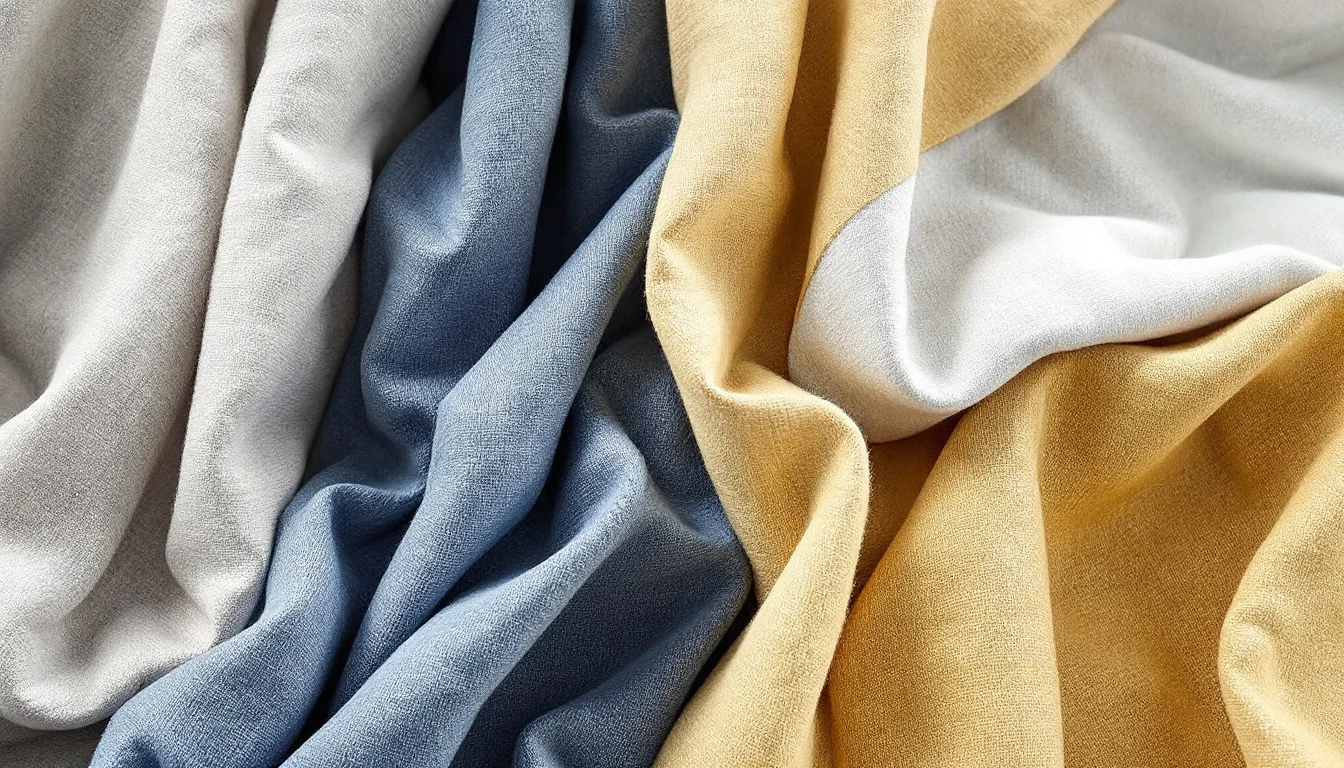
In contrast, a linen blend often looks substantially more layered and refined, presenting as an intentionally decorative element rather than a mere functional afterthought. The complex, irregular weave of flax-based blends captures ambient light differently, creating natural shadows and highlights across the fabric surface.
The Performance Deficit of Cotton
Beyond immediate visual appeal, the fundamental mechanics of the raw fibers dictate their longevity and structural integrity in demanding residential applications. Pure performance metrics tend to favour flax over standard alternatives. While specific performance varies by quality and condition, industry resources generally note that linen fibers possess a higher tensile strength than standard cotton.
This durability makes linen a strong candidate for window treatments that must endure daily physical manipulation, continuous sunlight exposure, and seasonal atmospheric changes. While cotton remains functional for basic domestic needs, the superior tensile properties of linen mean that drapery panels can maintain their structural integrity over a longer lifecycle. By moving to engineered blends, consumers access this inherent structural strength while bypassing the visual monotony often associated with basic cotton weaves.
The Engineering of a Modern Linen Blend
When analyzing the 2026 material shift, it is crucial to look past the romanticized idea of pure, historical flax. The reality of contemporary interior design demands textiles that function reliably under specific, daily environmental stresses. Linen blends are positioned by industry experts as a practical middle ground: they keep the coveted linen look while smoothing out some of the inherent parts that make shoppers hesitate. This vital material compromise marks the fundamental difference between a textile being beautiful in a catalog and one that actually works in a living room every day.
Dimensional Stability vs. Tensile Strength
The fiber ratio determines how the drape performs. The natural, flax-based structure of linen supplies high tensile strength, ensuring the fabric resists tearing and degradation under continuous daily use. However, pure linen is notoriously reactive to atmospheric changes. Blending the strong flax with synthetic fibers fundamentally alters how the textile behaves in a home environment. The addition of polyester improves dimensional stability and actively reduces the heavy wrinkling tied to moisture absorption. When pure linen absorbs ambient humidity, the fibers swell and can warp; the synthetic component interrupts this moisture-driven distortion, helping to lock the fabric's intended shape in place.
Optimizing Large Window Treatments
This deliberate engineering approach solves specific architectural challenges. Because polyester improves dimensional stability, blends are often a better technical choice for larger window panels. Large-scale drapes involve substantial amounts of suspended fabric that are susceptible to environmental fluctuations, localized humidity, and sagging.
By utilizing an engineered blend, designers can help ensure that sweeping floor-to-ceiling panels retain their intended dimensions regardless of seasonal humidity shifts. The hybrid textile maintains the sophisticated visual depth of pure flax while performing with the predictable, low-maintenance reliability of a synthetic.
The Second Fiber: Decoding 'Linen Blend' Labels
Navigating the modern textile market requires understanding that the term "linen blend" functions as a broad category rather than a guarantee of specific performance. The second fiber determines whether the fabric performs like a heavy-duty workhorse, a soft casual textile, or a highly delicate, more decorative panel. Consumers cannot simply purchase any blend and expect identical results; the specific fiber pairing dictates both the mandatory care requirements and the final architectural aesthetic.
Decoding the Formulation
The deliberate choice of the secondary fiber fundamentally changes the outcome of the drape. Different architectural spaces and lifestyle needs dictate entirely different fiber ratios. When shape retention, easier maintenance, and a smoother look over time are wanted, a polyester-heavy blend works exceptionally well. This specific combination is highly functional for busy households or vast living room windows where frequent steaming or ironing is impractical.
Conversely, a cotton-linen blend usually feels softer to the touch, making it ideal for transitional spaces where tactile comfort is prioritized alongside a relaxed visual structure. For a completely different interior goal, pairing linen with viscose or rayon often creates a fluid, silkier drape. This specific material combination maximizes elegance but generally requires more dedicated attention to care needs, making it better suited for formal dining rooms rather than high-traffic family areas.
Second Fiber Selection Matrix
| Blend Type | Primary Benefit | Maintenance Level | Ideal Room Fit |
|---|---|---|---|
| Linen + Polyester | Dimensional stability, smooth look, high shape retention | Low (resists moisture-tied wrinkling) | Large living rooms, high-traffic areas |
| Linen + Cotton | Superior tactile softness, relaxed visual structure | Medium | Family rooms, casual transitional spaces |
| Linen + Viscose/Rayon | Fluid, silkier drape, elevated decorative finish | High (requires careful handling) | Formal dining rooms, low-traffic areas |
Trade-Offs to Weigh
While engineered blends offer distinct practical advantages, designers must also consider the technical and environmental trade-offs of synthetic integration. The addition of polyester reduces the natural breathability found in pure flax or cotton panels. Furthermore, mixed-fiber fabrics introduce microplastic shedding during laundering and face a significant recyclability penalty compared to pure natural fibers, making them considerably harder to process at the end of their lifecycle. The broader environmental cost of textile waste is substantial: general textile waste in Europe generates approximately 5.6 million tonnes of CO₂ per year — the equivalent of one million petrol cars — underscoring why end-of-life recyclability matters when selecting blended fabrics.
Room-by-Room Strategy: The 'Undone' Bedroom Meets Technical Reality
The current evolution of bedroom styling perfectly illustrates the necessity of utilizing technically engineered textiles. The "undone" bedroom—a less perfectly styled, intentionally lived-in look—is currently replacing perfectly styled spaces across modern residential design. However, achieving this effortless, draped aesthetic without the room appearing chaotic or unfinished requires highly structured, hidden textile engineering.
The Illusion of Effortless Design
Layering solves the tension between a casual look and light control. To create the "undone" look effectively, decorators rely on meticulously constructed drapery that hangs casually on the surface but blocks ambient light. In bedrooms, the recommended setup is a linen blend face with a blackout lining behind it. This specific multi-layer construction ensures the drape does not look heavy, even when it performs like a more serious window treatment.
By separating the visual face from the functional backing, homeowners secure the best of both worlds. The linen blend face provides the relaxed, intentionally decorative texture required by the "undone" trend, while the hidden blackout lining still provides better light control and more privacy for sleeping environments.
Hardware and Finishing Details
The success of this bedroom strategy also relies on precise finishing techniques that dictate how the engineered fabric falls. For instance, an 80% polyester / 20% linen drapery fabric equipped with a weighted hem actively helps the panel fall better and reduces uneven edge lift. Even with a heavy blackout lining attached, the weighted hem helps the drape maintain clean vertical lines without flaring at the bottom. The final result is a window treatment that feels organic and soft on the surface but is rigorously engineered behind the scenes to function in the demanding environment of a modern bedroom.
FAQ: Technical Details of Sourcing Linen Curtains
Readers frequently ask how to evaluate the construction quality of modern engineered blends before purchasing or attempting custom interior installations.
What is the ideal thread count for a quality linen curtain? Unlike standard cotton bedding, window treatments rely on entirely different metrics for structural integrity and light filtration. Instead of traditional thread counts, professionals typically evaluate linen curtains by fabric weight or density to ensure a proper balance of long-term durability and the fabric's signature textured, light-filtering appearance.
Why do linen drapery panels sometimes distort or hang unevenly over time? The inherent physical characteristics of the raw material directly impact manufacturing difficulty. Linen fibers are long, naturally textured, and exceptionally low in elasticity. While this specific profile supports a crisp drape, it also means that cutting and sewing need extreme care. Because of low elasticity, a panel stitched or cut off-grain is more likely to distort.
The Future of Natural Synthetics
The division between strictly natural textiles and purely synthetic alternatives continues to dissolve within modern interior architecture. Engineered fabrics are establishing a new standard where daily livability dictates material composition just as much as visual appeal. As decorators prioritize environments that deliver sophisticated textures without rigid maintenance schedules, fiber ratios and hidden structural linings are becoming a central focus of textile procurement. Moving forward, growing recyclability pressure and emerging fiber-ratio labeling standards may reshape how linen blends are sourced by 2030, fundamentally changing how drapery interacts with interior environments.