Sewing Your Own Clothes in 2026: A Beginner's Guide
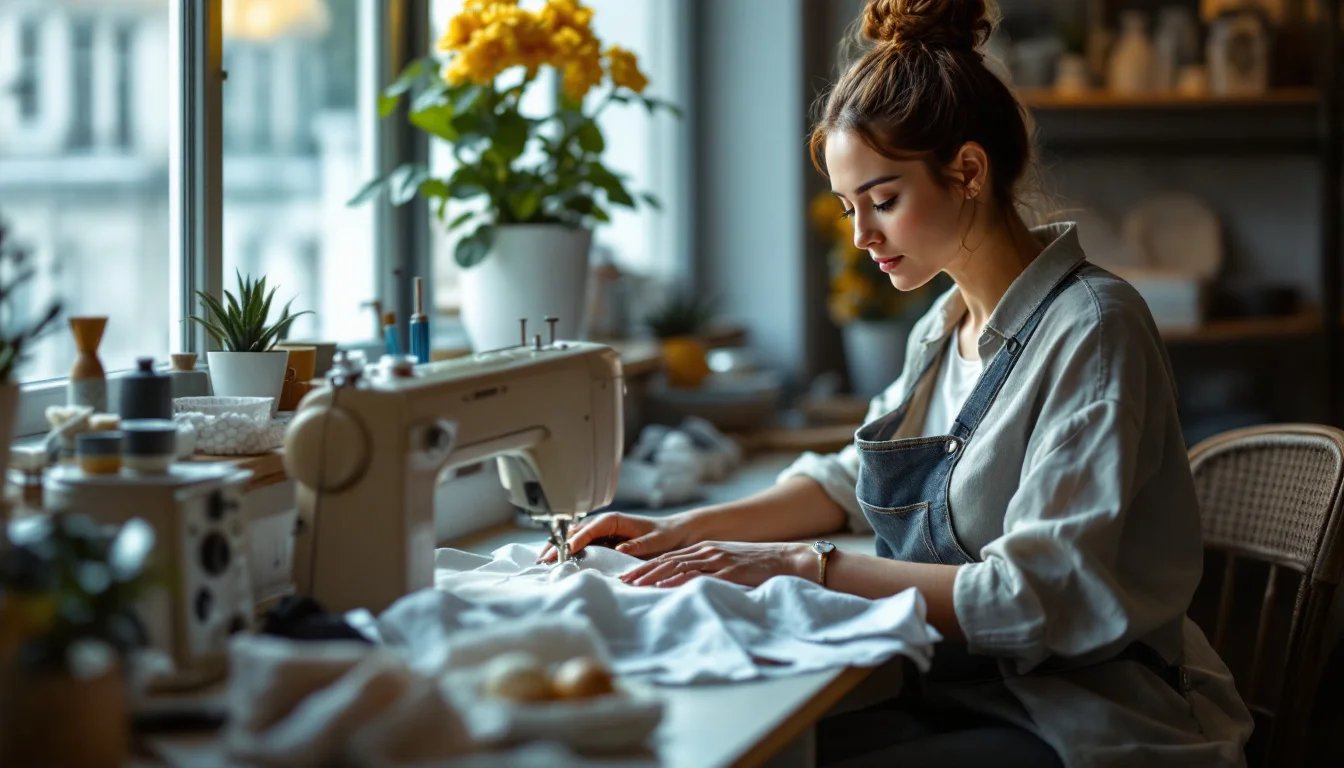
For generations, learning to construct a handmade wardrobe meant wrestling with delicate materials in craft store aisles. In a post on the Madison Makes blog, the author notes that the projects she has sewn all start from a pattern, which consists of templates and a set of instructions for putting those templates together. Traditionally, these patterns were sold as tissue-like paper templates in an envelope by a dominant group of companies known as "The Big Four." However, the landscape of garment creation has changed. According to the Madison Makes source, those companies have faced financial restructuring, and this method of purchasing patterns has experienced a partial decline.
Today, beginners enter an environment that shifts where and how they get help. By starting with forgiving materials, understanding modern digital delivery systems, and curating a specific hybrid toolkit of online community hubs and physical reference books, anyone can bypass the historical barriers to entry. This guide outlines the methodology for constructing a wearable piece of clothing from scratch, acknowledging that while modern methods offer convenience, they still require effort like assembling paper files or investing in digital projection.
Key Takeaways
- Independent PDF patterns dominate: The modern workflow relies almost entirely on digital files from independent designers rather than traditional craft store envelopes.
- Wovens beat knits for beginners: Starting with stable fabrics like cotton or linen eliminates the immediate learning curve associated with stretchy knit materials.
- Skip the fit test — but only with exact, verified measurements: Modern beginners are advised to skip the traditional mock-up garment (toile) on their first project, which relies heavily on accurately matching body measurements to the designer's specific size chart.
The Digital Shift: Why You Won't Find Patterns in the Craft Store Aisle
The decline of legacy tissue-paper patterns from many stores has made way for a highly decentralized design ecosystem. The author of Madison Makes, who states she has made over a hundred sewn projects since starting in 2022, notes that 99% of the patterns she has sewn are indie patterns—designs created by independent designers. These modern templates are purchased online as digital files, changing how a garment transitions from a concept on a screen to cut fabric on a table.
To navigate this environment, beginners must understand the modern digital delivery systems. Online community hubs assist in this process. For example, Threadloop is described as a website hub for organizing sewing projects and discovering and browsing patterns. Madison recommends utilizing this platform for tracking ongoing projects, managing fabric purchases, and curating a list of dream projects.
The 2026 PDF Pattern Pipeline
What we will call the 2026 PDF Pattern Pipeline outlines the specific choices sewists have when moving a digital purchase into physical production. PDF sewing patterns often offer three distinct options for rendering the templates—large format, print-at-home, and projection—alongside the specific case of zero waste patterns:
- Large Format Files: These are designed to be printed by a copy shop or a specialty printer on wide paper.
- Print-at-Home Files: These formats are segmented so they can be printed on normal 8.5'' x 11'' paper using a standard household printer, requiring the sewist to tape the grid of pages together before cutting.
- Projector Files: This paperless method utilizes a digital projector to beam the pattern lines directly onto the fabric, allowing the user to trace or cut immediately.
- Zero-Waste Dimensions: Zero waste patterns present an alternative workflow. They are designed to be cut out of a rectangle of fabric without leaving any waste fabric or fabric scraps. A zero-waste design may be purchased as a pattern and often provides instructions to cut simple shapes using specific dimensions, though some patterns still include templates for complex or curved pieces.
The 2026 Beginner's Toolkit: Tools and Tech You Actually Need
The barrier to entry for equipment remains manageable if you focus strictly on functional necessities rather than specialized gadgets.
A foundational sewing machine requires very few features to construct a complete garment. Madison advises using whatever machine you have access to, borrowing one, looking for a used one (as long as it works), or buying something reliable, affordable, and simple. For example, she has always sewn on a Singer Heavy Duty 4423 machine, which she bought on sale in college and describes as still working and a great starter machine. At minimum, a sewing machine should be able to sew a straight stitch and a zigzag stitch. While basic, these two functions help construct seams and finish raw edges. Eventually, having some sort of buttonhole capability will be important as you progress to more complex garments, but it is not required for initial projects.
The Essential Garment Toolbox
Beyond the machine, the basic sewing tool box recommended for garment sewing contains a specific set of items grouped by their function in the construction process:
- Measurement and Marking: A soft or flexible measuring tape is crucial for taking accurate body measurements. You will also need a marking tool that is either washable or heat-erasable to transfer pattern instructions onto the material.
- Cutting: Fabric scissors are required, and/or a cutting mat paired with a rotary cutter. These tools are used for cutting out the pattern pieces cleanly and for trimming loose threads as you work.
- Assembly and Deconstruction: Pins or clips are necessary for holding the fabric together securely while sewing the seams. A seam ripper must also be kept on hand to undo any inevitable mistakes.
- Finishing: An iron is a mandatory tool for ironing the fabric before cutting, pressing the seams open during construction, and shaping the final garment.
The Fabric Dilemma: Why Wovens Win for First Projects
The key fabric distinction for beginners is understanding woven versus knit structures.
Either type of fabric can be made from many different fibers, including cotton, linen, bamboo, synthetics, and various blends. However, the mechanical construction of the textile dictates how it behaves under a sewing machine needle. Knit fabrics are knit together, which gives them inherent stretch. This elasticity is what makes them ideal for t-shirts, sweatpants, activewear, and swimsuits. In contrast, woven fabrics are woven together on a loom and have no stretch, or very little stretch. Woven fabric also frays when cut, whereas knit fabric generally does not, though it can run or roll at the edges.
Strategic Material Sourcing
Madison advises that woven fabric is easier to work with than knit fabric. Knits require an additional learning curve because the material moves and stretches as the machine attempts to stitch it. Therefore, for a first garment, you should actively choose a project that uses woven fabric.
When sourcing materials for beginner fabrics, Madison explicitly recommends cotton, linen, or a blend of those two fibers, noting they are the easiest to work with. However, beginners must be careful regarding the specific category of cotton they purchase. Madison cautions that quilting cotton or upholstery fabric can result in a much stiffer piece of clothing, as these textiles are engineered for structure and durability rather than the drape typically desired for soft, everyday apparel, though they can still be used for highly structured designs.
Your First Garment: The Case for Skipping the Fit Test
The traditional advice for starting a garment is to first build a prototype. A fit test, often called a toile or a muslin, is a version of the garment made in cheap fabric in order to test the fit of the size you chose.
Madison actually recommends not making a toile for your first project or two. This is heavily conditional: it only works provided your body measurements are completely accurate and matched carefully to the project's size chart. This step cannot be skipped or guessed. Every single sewing pattern designer will use a different size chart, making standardized commercial sizing irrelevant. Having your accurate measurements that you can use from pattern to pattern is crucial for success.
The Beginner Project Roadmap
Madison recommends starting with a sleeveless shirt and then moving to an elastic-waist pair of pants or shorts, strictly in that order.
If you are searching for accessible beginner pattern options, Madison names several specific indie patterns that fit these criteria:
- All Well Box Top by All Well Studios (which was Madison's first garment project)
- Laurence Top by Vivian Shao Chen (specifically the sleeveless view)
- Ruby Vest by Sydney Graham
- Pomona Pants by Anna Allen
- Lane Pants by Sydney Graham
Curating Your Skills: Building a Physical Reference Library
In a post on the Cochenille blog, Susan, owner and Creative Director of Cochenille Design Studio and a former college-level clothing construction instructor, recommends a specific mindset approach: before sewing a new pattern, you should step back and evaluate the pattern or garment. Ask yourself what techniques you might use, whether there is a new technique to explore, what new notions you might include, and whether ready-to-wear clothing currently in your closet uses a technique you find appealing.
Categorizing Construction Skills
The sewing skill set can be grouped by the garment area being constructed. This includes:
- Neckline treatments: Deciding between facings versus a full lining.
- Sleeve insertion: Choosing between a traditional set-in sleeve versus an "industry fast" method.
- Pockets: Techniques for prepping a pocket or installing inset seam pockets.
- Hems: Executing a standard finish versus more creative applications.
- Zippers: Various zipper insertion techniques.
Curating Your Physical Reference Library
To support this skill development, Cochenille recommends five foundational reference texts for sewing, including a collection of vintage sewing books alongside structured manuals. Below is a comparison of four of these foundational reference texts to guide your investment:
| Book Title & Author | Formats Available | Page Count | Core Strength |
|---|---|---|---|
| Reader's Digest Complete Guide to Sewing | Hardcover, Softcover, Kindle | Approx. 504 pages | Step-by-step illustrations |
| The Sewing Book (Alison Smith) | Hardcover, Kindle | 400 pages | Over 300 step-by-step techniques (>200 pages of techniques after tools discussion) |
| Master the Coverstitch Machine (Johanna Lundstrom) | Softcover, Kindle | 158 pages | Specialized coverstitch mastery |
| The Serger's Technique Bible (Julia Hincks) | Softcover/Paperback | 128 pages | Serger basics (thread tensions, troubleshooting) |
Frequently Asked Questions: Next Steps in Garment Sewing
Do I have to destroy my printed pattern to cut my size? Tracing paper is optional. Once you have the printed pattern, you have two choices: you can cut your specific size directly out of the paper to save time, or you can trace your size with tracing paper. Tracing allows you to keep the original paper pattern intact so that you can sew a different size later.
Can I start sewing clothes without purchasing a pattern at all? Yes. Skirts and dresses, especially those with ruffles, are described as great candidates for simple patternless sewing. Because they often rely on gathered rectangles rather than complex curves, they can be a good way to try sewing without purchasing a pattern first.
What if I want to design my own patterns later? Self-drafting your own projects is described as a more advanced workflow that you might explore after sewing a few projects. It may be highly useful for ensuring the best possible fit by creating your own customized bodice and/or pant block, rather than relying on standard designer size charts.
Conclusion
Transitioning from buying ready-to-wear clothing to producing your own garments allows makers to control fit and material choices. By tracking projects in community hubs and working directly from independent designers' files, modern sewists take an active role in their wardrobe's creation. The reliance on careful measurement rather than arbitrary retail sizing requires accuracy but ensures custom results, suggesting that technology and traditional craftsmanship can merge to empower individual creators.